

Photography at Holy Land Christian Sites
Photography at Holy Land Christian sites can reward the travel photographer with stunning images. Our photography tours covering Christian sites in Israel were specifically designed to discover and photograph the most important locations to the faithful in the Holy Land. From sites associated with the beginning of Christianity, to photographing remnants of the past in the footsteps of Jesus, you will experience this unique tour through the eyes of a professional photographer. From the birthplace of Christ in Bethlehem, to his life spent in Nazareth within the Galilee, this spiritual and customized tour was created to explore the places of Christian worship that followed his crucifixion, death and resurrection in the ancient city of Jerusalem. This photography tour is divided into two parts – the Galilee region and Jerusalem, and can be incorporated into our other photo tours and workshops in Israel. Photography at Christian sites in the Holy Land will undoubtedly be a highlight of your trip to Israel.
Biblical locations of faith
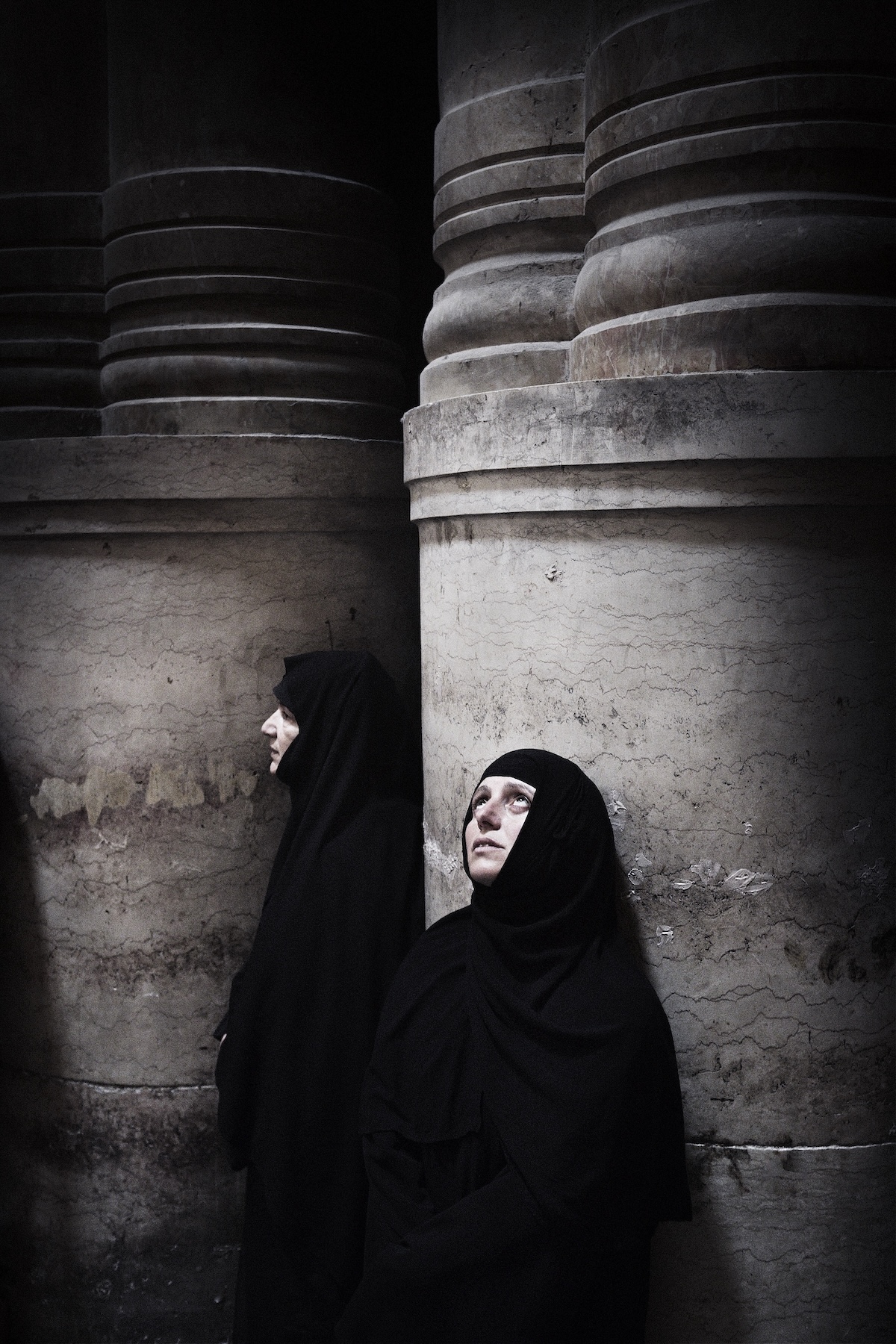
While thousands of Christian pilgrims visit the Holy Land each year to experience Biblical locations of faith, many photographers come specifically to photograph the air of spirituality embedded in its faithful followers, and of sites associated with the Bible that are spread throughout the land of Israel. For some, capturing the essence of one of the three Abrahamic faiths can reward the travel photographer some memorable images. For others, discovering this unique country from where the birth of Christianity arose can be a life-changing experience. There’s a reason why the Holy Land has been a pilgrimage destination for Christians for over two millennia. Its rolling hills, ancient stone streets, and timeless churches whisper stories that have shaped Western civilization.
For the photographer, the Holy Land is a living museum where every stone, sunset, and silhouette holds a narrative waiting to be captured. We will explore the bustling streets of Jerusalem to the tranquil shores of the Sea of Galilee, while honoring the spiritual significance of each location. Expect practical gear tips, lighting strategies, cultural etiquette, and storytelling ideas that will help you create images that are as significant as they are breathtaking.
Holy Week in Jerusalem 2026
The most significant event in Christianity is undoubtedly Holy Week. Typically held around March/April each year, upcoming dates are from March 29 – April 5, 2026. For information on the daily schedule, you can check our past blog post on this memorable Holy Week and Easter photo tour in Jerusalem.
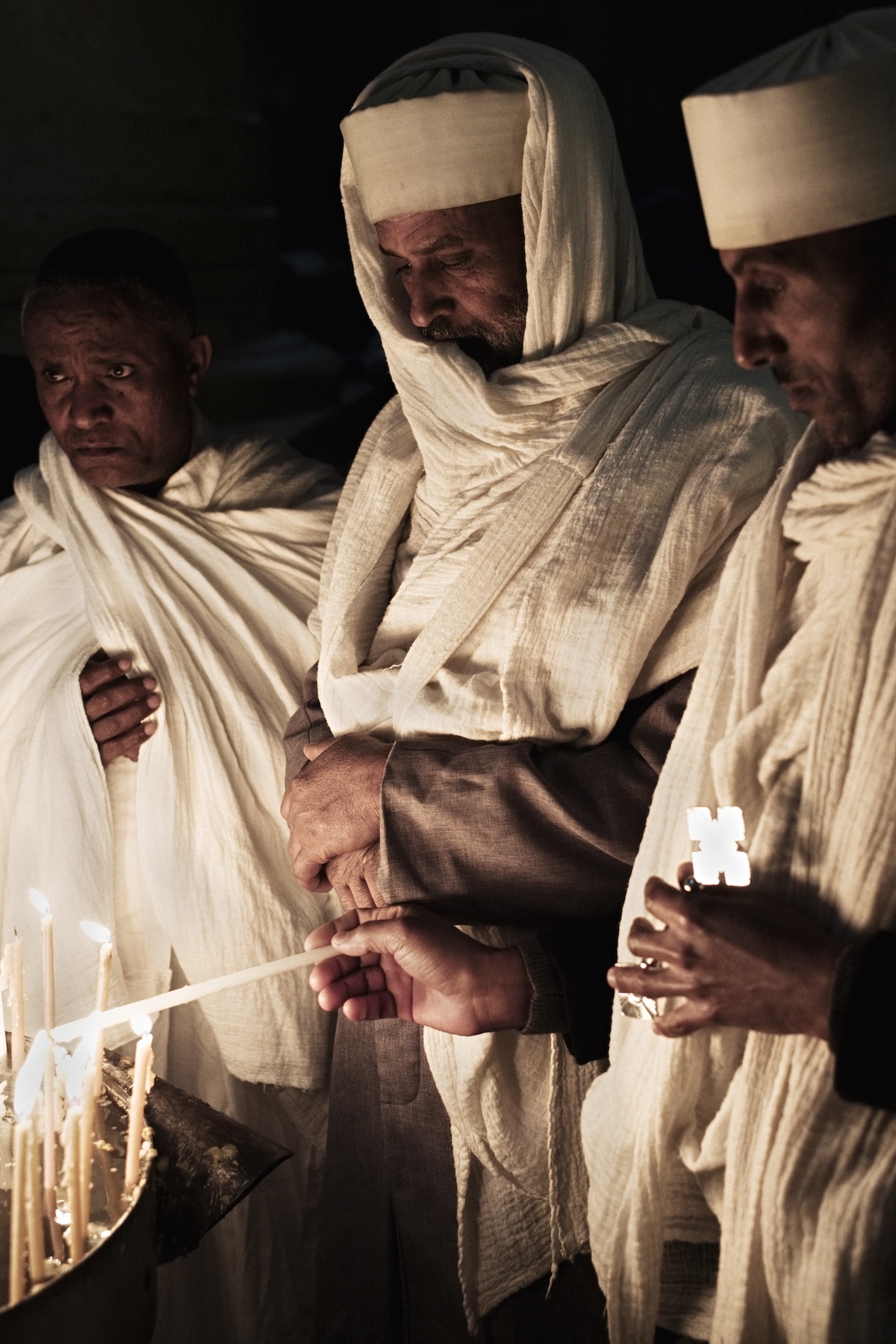 Beginning on Palm Sunday, processions of joyful crowds carrying palm fronds head down from the Mount of Olives in Jerusalem through the Kidron Valley and enter the Old City. Today marks a happy event as Jesus was said to ride his donkey into Jerusalem as crowds greeted him despite the city being under governance of the Roman occupation. As the Jewish residents were preparing for Passover – the national holiday commemorating the freedom from their slavery in Egypt, their hope to be free in the promised land was in the salvation from this man from Nazareth.
Continuing the week includes Holy Thursday, which symbolizes the washing of the feet at the Holy Sepulchre Church and a pilgrimage to the Upper Room on Mount Zion. This day is represented throughout the world, as believers learn of the story of The Last Supper, and the breaking of the bread amongst his disciples. That night, Jesus left for the Garden of Gethsemane to pray, where he was eventually arrested by the Roman army.
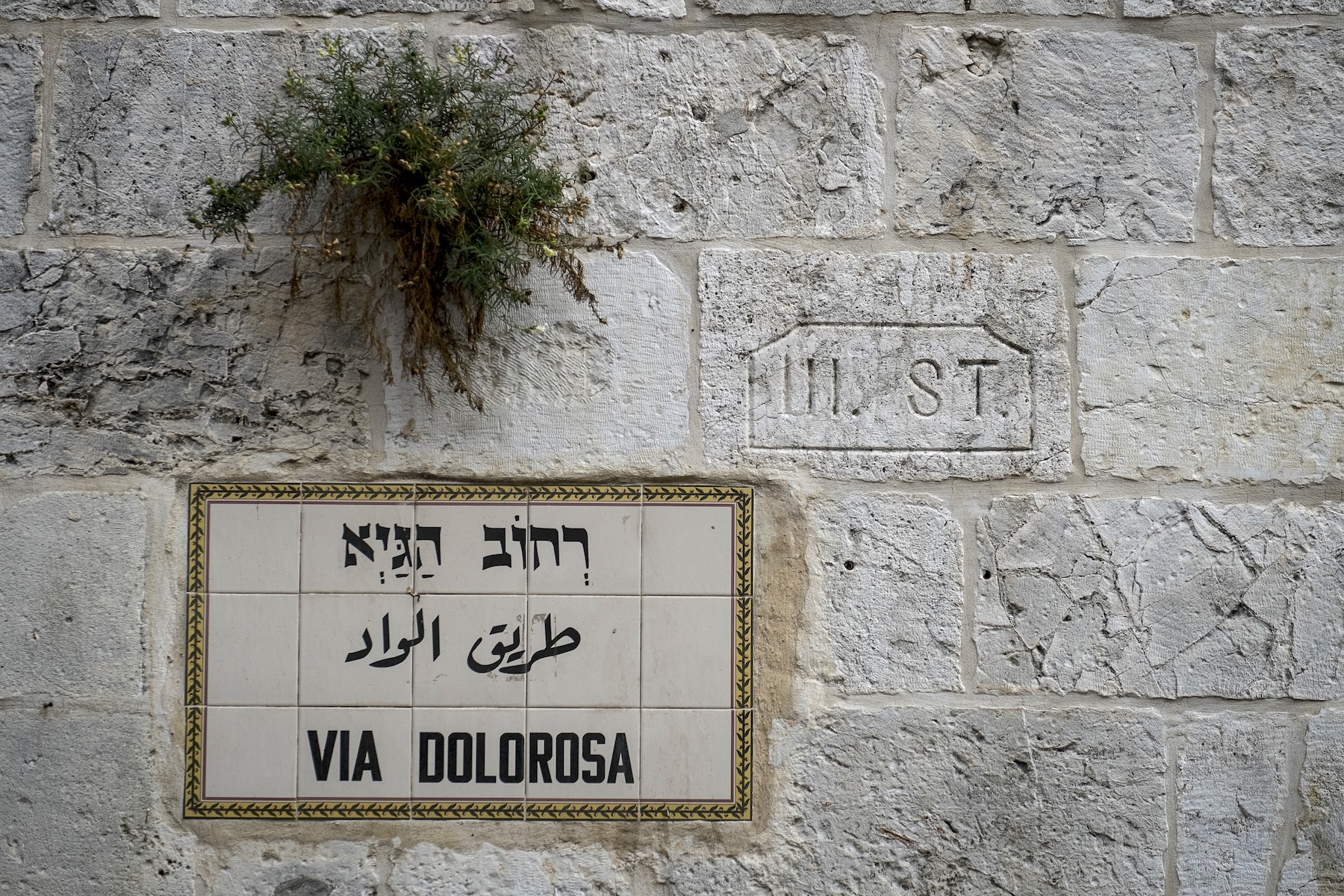
Good Friday is known the world over, the day when Jesus was subjected to his trial and torture before he walked the ancient stones of the Old City bearing the cross of his crucifixion until his ultimate death. Today a solemn, moving procession follows the Stations of the Cross along the Via Dolorosa [The Way of Suffering] to the Church of the Holy Sepulchre. A church was built at each station, where followers from around the world come to pray and absorb his words of forgiveness.
On Holy Saturday, the Holy Fire ceremony takes place within the Redonda of the church. This is one of the most breathtaking events of any religion, and a visual treat for any photographer. Holy Saturday represents great meaning in the Christian faith. It marks the period that Jesus lay in the tomb, and is a day of waiting, silence, and hope. Also known as the Miracle of the Holy Light, the Greek Orthodox Patriarch of Jerusalem enters the shrine containing Jesus’ tomb and waits for a miraculous blue light to ignite his candles. The flame then ignites the candles held by all the followers within the Holy Sepulchre.
On Easter Sunday, masses gather at the Holy Sepulchre, and is an important date for Protestants that head to the Garden Tomb. This is the site where Jesus was said to have resurrected from the dead, subsequently marking the most joyous day in the Christian calendar, and marks the beginning of a new chapter for the Christian faith.
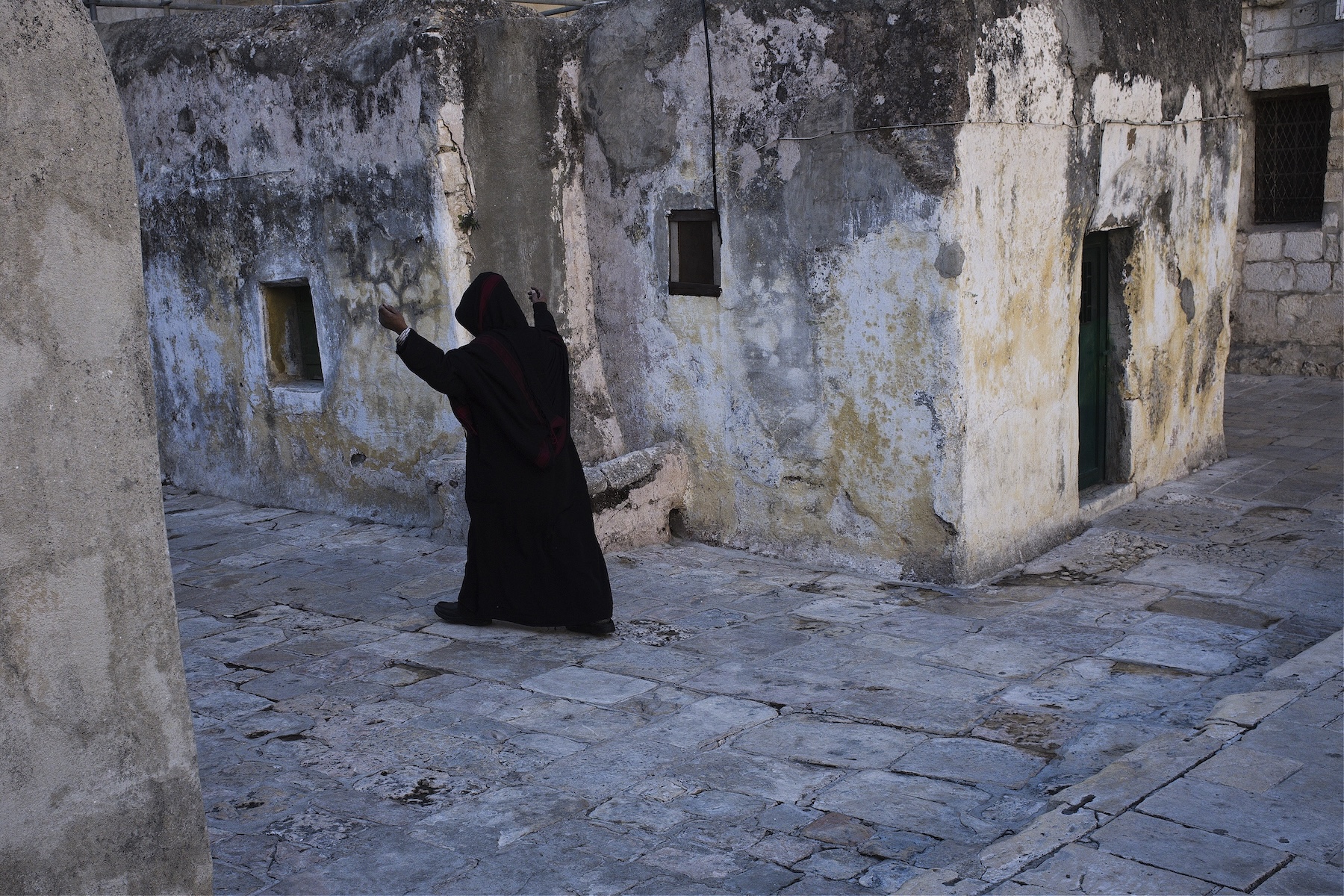
Christian sites associated with the Bible
Christian sites associated with the Bible begin at the very birthplace of Christianity. The Church of the Nativity and its location in Bethlehem is known the world over, partly due to its UNESCO World Heritage Site status, though mostly due to it’s relevance with Christmas. Located 10km south of Jerusalem, the Basilica was built in 339 AD and is composed of the Armenian, Franciscan and Greek Orthodox Convents, and includes part of the Pilgrimage Route. The cave on the site is widely believed to be the birthplace of Jesus. Bethlehem is located in Judea and Samaria [commonly referred to as the West Bank].
In Southern Israel, within the Negev Desert and Judean Hills, a presence of key Christian sites includes Byzantine-era churches and monasteries. Significant pilgrimage routes include the archaeological site of Nitzana, the ruins of Shivta, and churches in Mamshit. Touring Southern Israel gives an insight into the harsh beauty of the landscapes and archaeological ruins of the Kingdom of Judea, and make up part of our multi-day workshops in the region.
The roots of Christianity in the Galilee
 The Galilee region of Northern Israel draws many Christian pilgrims due to the number of important sites associated with Jesus. Notable sites include Nazareth, the town where Jesus healed and worked miracles. Born to Mary and Joseph, he traveled and preached throughout the Galilee and Judea. His preachings taught his followers the importance of love, forgiveness and repentance. Nazareth houses the location of the Basilica of the Annunciation and St. Joseph’s Church.
Yardenit is a location on the River Jordan, and a popular site for followers that experience the Holy Land. Baptisms are held here, and pilgrims come to absorb the tranquility and spiritual beauty of the waters in which Jesus was baptized by John the Baptist. Yardenit is one of our favorite locations to photograph pilgrims from around the world, as it signifies such importance to the Christian faith. The River Jordan flows from Mount Hermon in the Golan Heights, through the Sea of Galilee, and continues to the Dead Sea, the salt sea located at the lowest point on earth.
Other important sites of note in Northern Israel include Capernaum – the home town of Jesus’ ministry that houses an ancient synagogue and St. Peter’s House, the Mount of Beatitudes – the location of the Sermon on the Mount, Tabgha – known as the site of the miracle of the Multiplication of the Loaves and Fishes, Cana – where Jesus performed his first miracle by turning water into wine. And of course, the Sea of Galilee [also known as Lake Tiberias], where Jesus performed many miracles, including walking on water.
Christian sites of Jerusalem
While many Christian sites are located in the Galilee region, there are sites of major importance to the Christian faith within the Old City of Jerusalem and surrounding areas. Due to the history of this unique city dating back 5,000 years, the ancient stones are testament to a tumultuous past of being conquered over 40 times throughout its history, before the eventual reunification of the city by the Israeli forces in the 1967 war from Jordanian occupation.
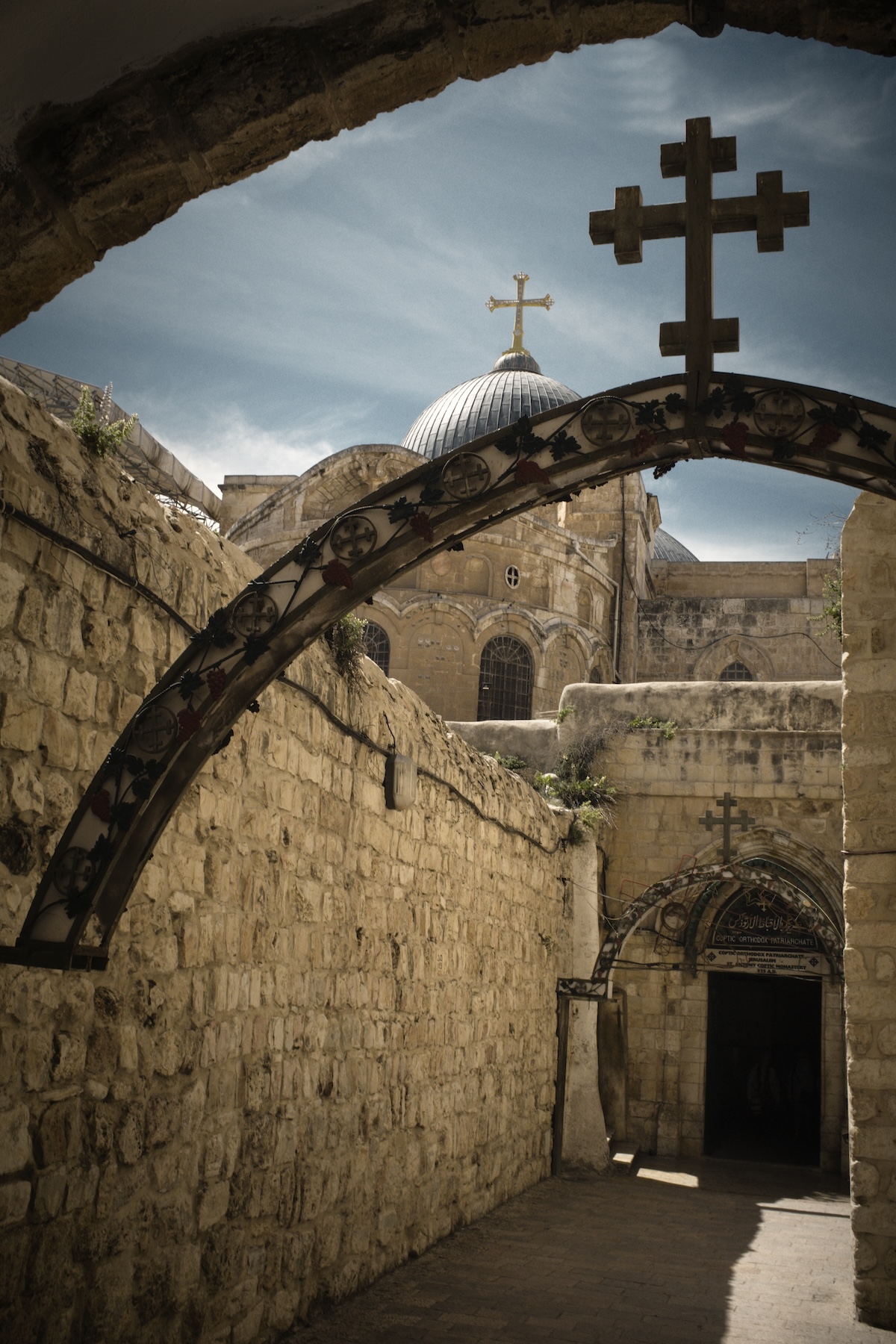
The Old City is made up of the Jewish, Christian, Armenian and Muslim quarters, predominantly established during the Ottoman rule. The Christian quarter contains over 40 holy sites, and is the location of Christianity’s most significant site, the Church of the Holy Sepulchre. Believed by millions of followers to be the exact location of Jesus’ crucifixion, burial and resurrection, it has been part of the pilgrimage route since its construction in the fourth century by Constantine the Great. It was destroyed by Al-Hakim in 1009, before reconstruction then subsequent capture by the Crusades. Photographing the rotunda when shafts of light enter through the domed roof and light the incense smoke adds to the atmosphere and mystery of this monumental site.
The Via Dolorosa, or the “Way of Suffering,” is a historic 600-meter path winding through the Old City of Jerusalem. Traditionally regarded as the route Jesus took on his way to crucifixion, it includes 14 Stations of the Cross, the last five situated within the Church of the Holy Sepulchre. Recognized as a significant pilgrimage route, it was formalized in the 18th century. Regarded as one of the holiest locations in Christianity, it offers believers the opportunity to follow the journey of the Passion.
Located just outside the walls of the Old City on Mount Zion, Dormition Abbey is a Benedictine Monastery that is associated with the Virgin Mary. With a distinctive conical roof, it was built in Romanesque style design. Within the complex, followers come to visit the Room of the Last Supper, as well as the Tomb of King David. Subsequently, Orthodox Jews and Christians come here to pray. The the Last Supper was famously depicted by Leonardo da Vinci’s famous masterpiece.
The Garden of Gethsemane located at the foot of the Mount of Olives is a peaceful orchard, situated in the Kidron Valley, just outside the city walls. It was here that Jesus often visited with his disciples, and makes up part of the Pilgrimage route. Most notable to Gethsemane are the ancient olive trees that date back to the Crusader period. Opposite Gethsemane houses the Church of All Nations, the Basilica built on the site of Crusader era churches. It is said that Jesus prayed here before being arrested by the Roman army. The facade is particularly beautiful to photograph in the late afternoon, when the light illuminates the beautiful gold mosaics.
The peaceful Garden Tomb, located outside the city walls near the Damascus Gate, is an important site for Protestant Christians. Believed by Protestants to be the burial site of Jesus, most experts believe the Church of the Holy Sepulchre to be the authentic location. Although descriptions of the tomb in the New Testament fits the narrative, archaeological sources date the site 7-8 centuries earlier than Jesus’s burial. Findings suggest it was a burial site dating back to the Iron Age, and then later used as stables by the Crusades.
Dress codes when visiting Christian sites in the Holy Land
Regarding dress codes when visiting Christian religious sites in the Holy Land, a general rule is to wear modest, respectful clothing. Shoulders and knees must be covered for both men and women. Avoid short skirts, shorts, sleeveless tops, and revealing clothing. Carrying a scarf or pashmina is highly recommended for covering up at stricter sites.
Unlike in Judaism, headwear for men should be removed, not worn. You will notice these different norms when coming from the Western Wall to the Holy Sepulchre for example. Footwear should also be modest, though sandals are widely accepted. In any case, to walk on the ancient stones in the quarters of the Old City, it is advisable to wear comfortable, airy walking shoes.
For visitors wearing traditional dress from other religions, their dress is accepted and respected. In Jerusalem, where the weather is cooler and more changeable than other parts of Israel, it is advisable to were thin layers of clothing that can be added or removed accordingly. The winters in Jerusalem can be cold, and due to the altitude, can sometimes experience snow. The summer in Jerusalem is a welcome relief from the heat of other regions of Israel, so it is advisable to check the temperature before visiting, and dressing accordingly.
Southern Israel includes more Christian archaeological sites within National Parks, and dress code due to the high temperatures are more relaxed. You should ensure to bring a hat and use sunblock due to the extreme heat, particularly in the summer. Christian sites in the Galilee are extensive, and you should abide by the same dress codes as Jerusalem. If you plan to participate in a Baptism in the Jordan River, you should also bring waterproof footwear, such as plastic sandals.
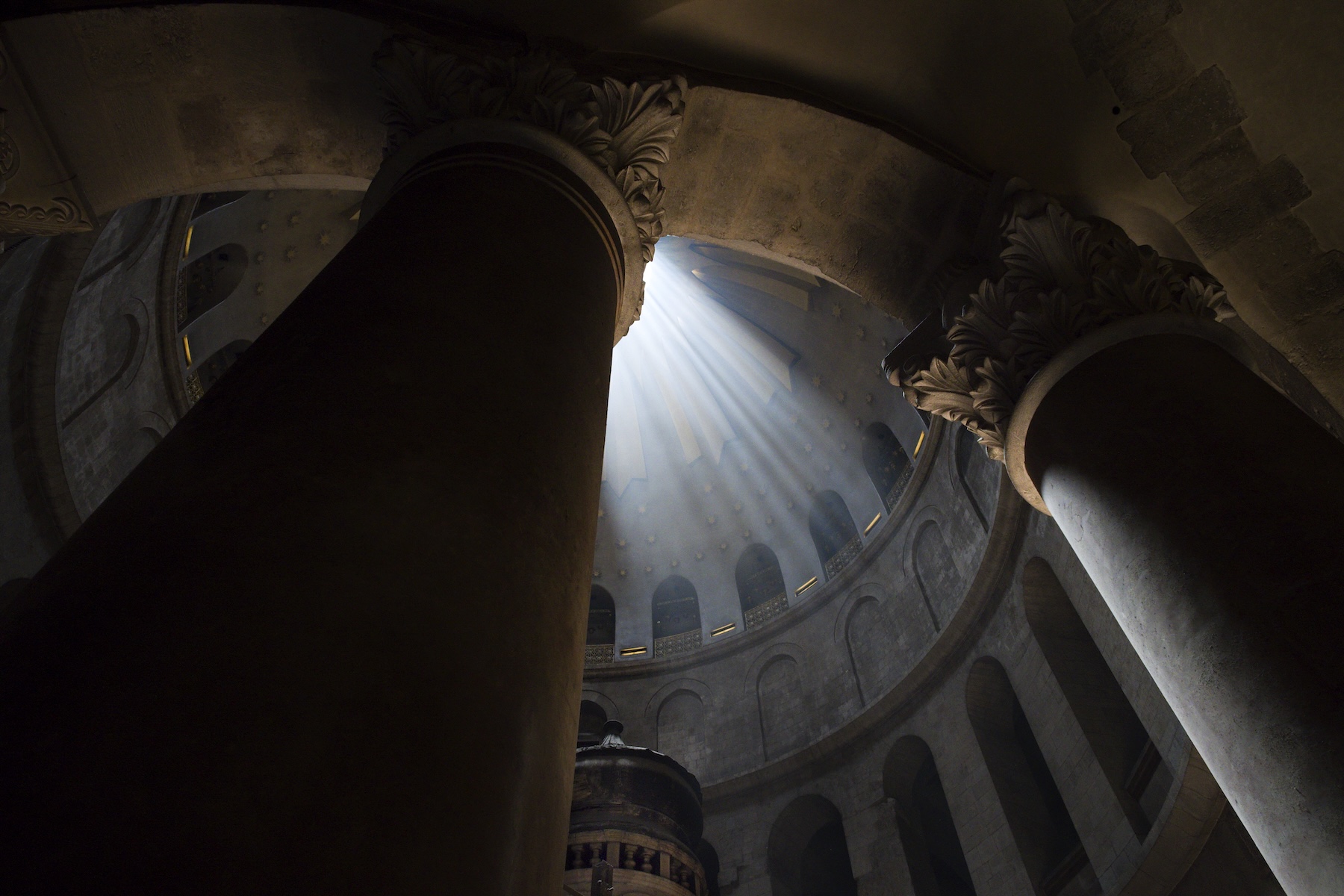
Photo tips for photography at Christian holy sites in Israel
As a general rule, outdoor photography at Christian holy sites in Israel applies to other genres of photography. Early morning and late afternoon light at golden hour increase saturation of colors, avoid harsh lighting and casts deep black shadows. This creates depth in your images, and allows for layering compositions, where foreground, middle ground and background create separation of subjects to their surroundings. Ideally you would plan your day in capturing subjects outside during these lighting conditions, and is ideal for street photography, architectural, landscapes and environmental portraits.
Likewise, when you are shooting in the middle of the day, check for weather forecasts to plan your day. Sunny days that have a thin veil of clouds, or cloudy days can be ideal for creating portraits with even lighting. Think of the look you would get when photographing portraits in a studio using a soft box. Excellent results can be had when utilizing natural light in this way, as it avoids shadows from noses, harsh light on skin tones, and dark orbits around eyes. Another tip when shooting portraits during the middle of the day is to position the subject in the shade. Indirect light that bounces, reflects and illuminates the subject from the ground and sides, without directly illuminating the subject is a recipe for stunning results.
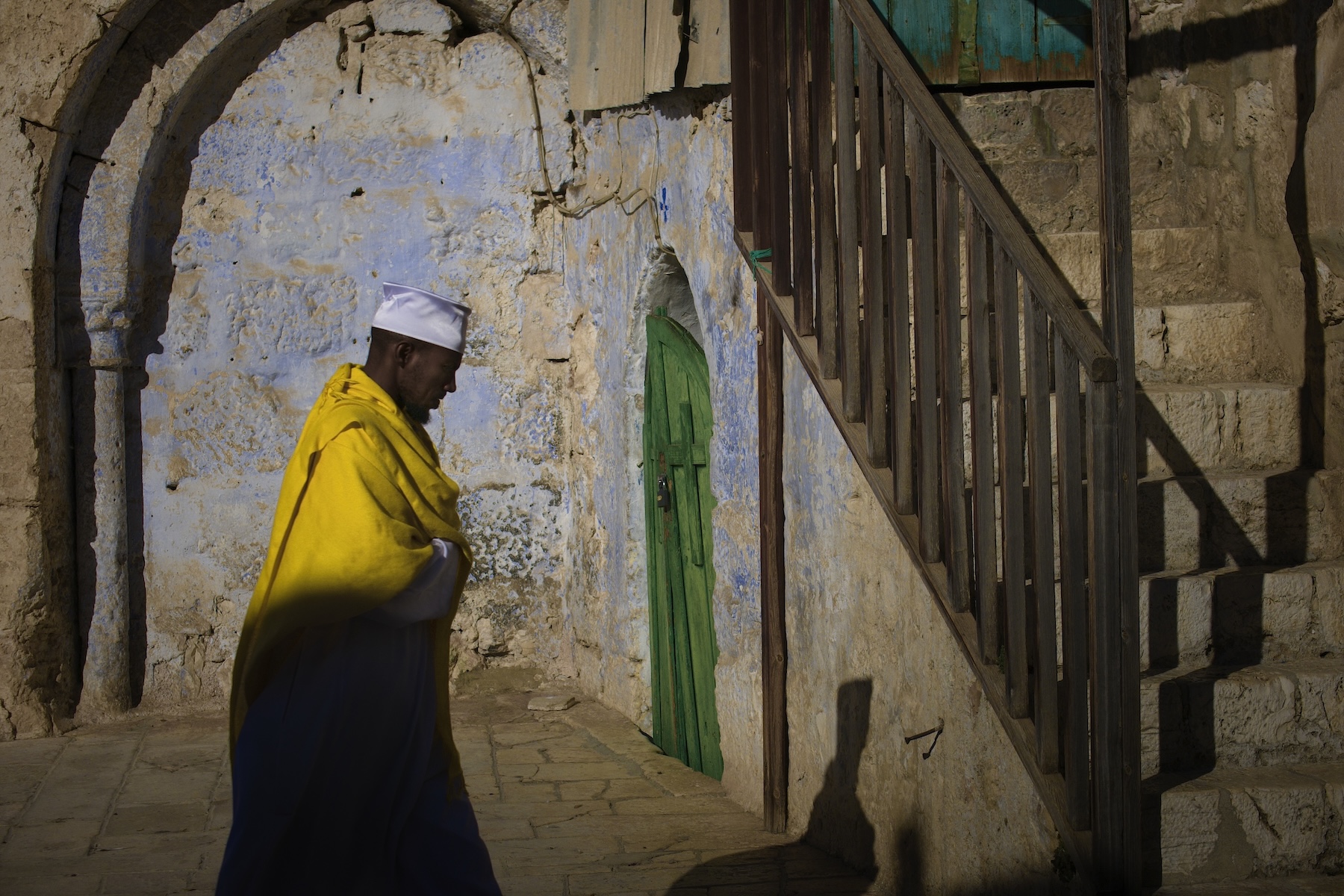
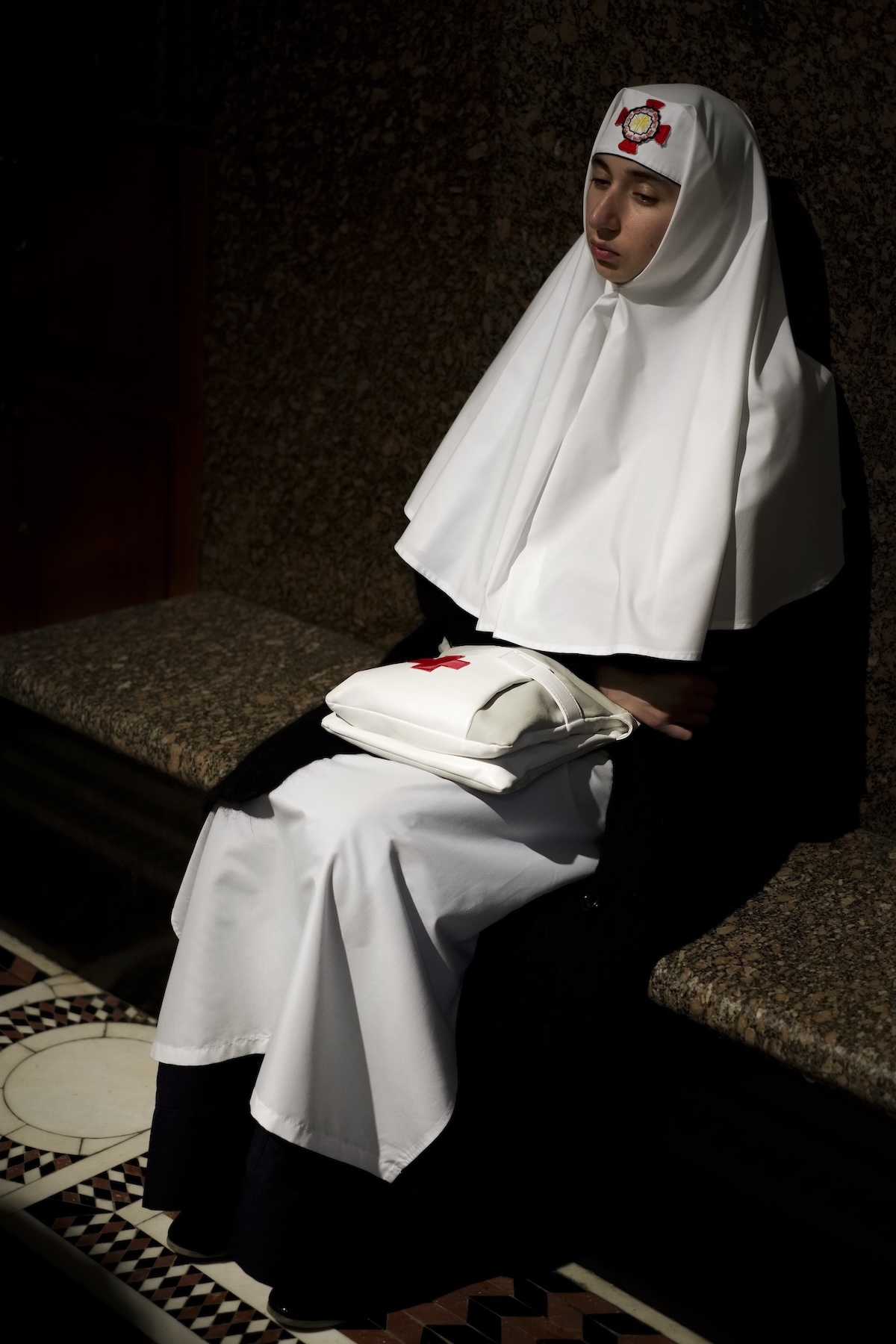
 Traditional Christian dress is generally very contrasty. Deep blacks or bright whites can cause challenges for the camera’s exposure metering. It may be necessary to use the spot meter setting or exposure compensation feature to balance the exposure correctly. To create impact in your images, it can be ideal to position light subjects on dark backgrounds and vice versa to make your subjects stand out from the background immediately. A nun dressed in white exiting the doors of an illuminated church from ambient light for example, will give your image subject isolation, context and impact.
When photographing the interior of dark, atmospheric churches and other religious sites, the lack of light creates a variety of challenges. Firstly, unless special permits are given, it is unlikely that the use of a tripod is allowed. For static subjects, you may be able to use a table-top tripod or compact travel tripod in order to use a lower ISO. To freeze moving subjects, or when the lack of light available does not allow you to handhold your camera without using high ISO’s without causing significant noise, you will likely have to try and brace your camera, or pan subjects and hope for the best. On the plus side, wide-angle lenses allow slower shutter speeds, and are often preferable to include the scope and beauty inside places of worship. Finally, as well as the technological advancements in low noise from high ISO’s in modern cameras, many cameras and lenses now include stabilization – a highly desired feature to many photographers.
Important religious events such as Holy Week, Christmas, Easter, Baptisms etc are ideal dates to photograph Christian sites and celebrations. As well as increasing your chances of creating captivating images, crowds of pilgrims, religious leaders and followers are more numerous, and holy sites will be more accessible and photogenic during significant dates in the Christian calendar. In Christianity, Saturday is recognized as the Biblical Sabbath and was observed by early Christians, though by the 4th Century, Sunday became the primary day of worship to recognize the resurrection of Jesus.
To keep up to date with upcoming Christian events, you can check the resources on our Facebook page, or to become acquainted with the type of subjects and locations within Israel, you can check our Instagram page here.